


Technology is a powerful tool for mitigating increasing business costs

Given rising inflation and a gloomy economic outlook for many companies in the UK, optimising expenditures and cutting costs is essential to ensure the business continues to function effectively. It is imperative to maintain competitive performance, and controlling costs is often a critical step in obtaining robust business operations alongside operational efficiency.
Adopting the appropriate technology can drastically reduce the time invested in labour-intensive tasks, minimise human mistakes, and guarantee that projects are brought to fruition effectively, enabling a business to do more with less. As a result, your business will be better equipped to perform more proficiently, reduce expenses, and strengthen communication with customers and employees.
A cloud-first strategy reduces the cost
A cloud-first strategy encourages businesses to prioritise cloud solutions when creating or modifying new processes. This forward-thinking approach to cloud adoption must be implemented from an overall organisational perspective to bring costs down and enhance efficiency.
However, an effective cloud-first strategy is not cloud at all costs; it requires a pragmatic approach that generates genuine business value – from greater operational efficiency to increased revenue – through careful consideration of available options. Cloud solutions allow users to access applications remotely from various devices seamlessly, enhancing the user experience, often a significant factor in retention and recruitment.
Businesses that embrace cloud technologies typically utilise software-as-a-service (SaaS) – cloud-based applications accessed through the web or an API for integration – eliminating the need to host the application within an on-premise environment. Effective SaaS deployments sync with business objectives and meet security, business continuity and disaster recovery requirements.

Businesses prioritising a cloud-based strategy have access to more than just hosting applications in their private environment. If an application is unavailable as SaaS, leveraging the public cloud through industry-leading vendors like Microsoft Azure or Amazon Web Services (AWS) can help reduce resource requirements. These providers offer Infrastructure-as-a-Service (IaaS), a form of cloud hosting that securely provides real computing power on demand with flexible contracts.
Business leaders should consider the potential cost savings of cloud migration when planning. Compared to traditional on-premise models, Software-as-a-Service (SaaS) applications offer scalability – the capacity to increase or decrease resources as needed without extra investments such as additional servers or software. This is facilitated by the SaaS provider, who typically takes care of capacity planning, scaling solutions, and integrations.
Cyberattacks
The exponential growth of cybercrime means the question facing businesses is, not if, but when a cyber-attack will happen. Amid the ever-growing frequency, sophistication and impact of this nefarious activity, companies can’t cross their fingers and hope they won’t be targeted. Instead, senior executives must ask themselves, ‘how can we best protect our business and data from this genuine threat and prevent reputational damage?’
To achieve this resilience, avoid client loss and exposure to significant fines, the following tips will help businesses and their employees stay secure:
Adopt a “zero trust” strategy
“Never trust, always verify”. With a workforce operating beyond office boundaries, businesses must rely on more than traditional security (firewalls and VPNs) to protect their business. They should look to managed security services with a rigorous posture to access applications and data within their network.
Prevent phishing scams
In 2022, 45,367 impersonation scams or phishing attacks cost £177.6m. We don’t have time to analyse every message in our inbox forensically – and it’s this complacency that cybercriminals attempt to exploit.
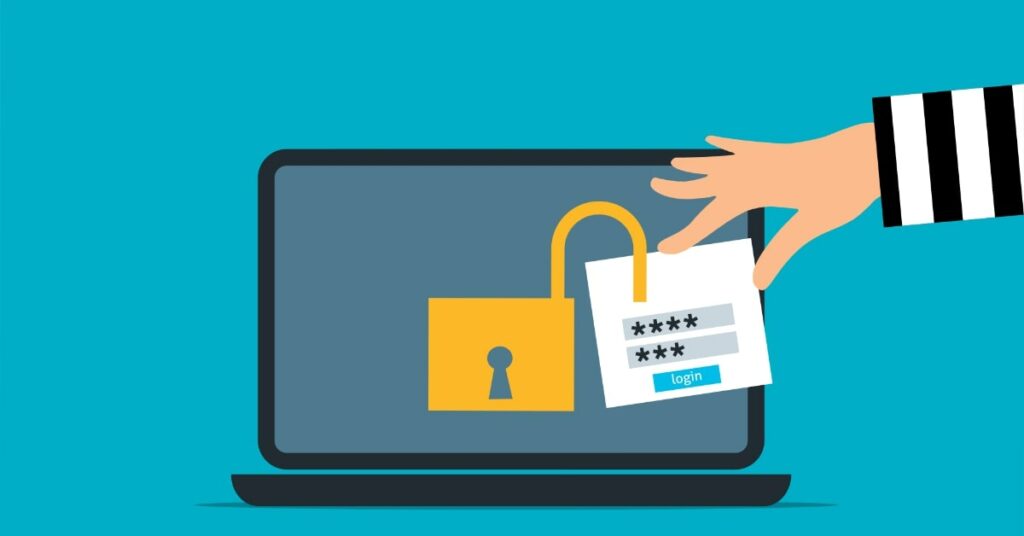
To mitigate this threat, email filtering tools can be deployed to detect and block malicious emails to prevent employees from opening them and to restrict clicks/links from launching criminal websites – preventing viruses or malware from compromising a business’ systems and exposing confidential client data to cyber criminals.
Strong security awareness amongst employees is a vital layer in the fight against cybercrime. Proactive businesses also deploy phishing attack simulators – a security awareness tool that helps employees identify phishing scams. This service reinforces security controls by periodically running test campaigns that emulate basic and advanced phishing attacks, empowering employees with a practical understanding of cybersecurity. Regular Penetration Testing will also look for network and systems vulnerabilities and highlight areas where security needs to be enhanced.
Accurate information informs better decisions and reduces costs
Businesses should employ a range of applications to streamline their daily operations to improve organisational infrastructure, such as Customer Relationship Management (CRM) applications, which store vital information regarding customer interactions. These can be leveraged to boost customer engagement and convert sales.
This data is essential when tracking established key performance indicators (KPIs) to gain insight into the business. Companies should leverage modern technology to track leading metrics (real-time data) to identify potential issues for prompt mitigation. Such indicators support meeting business objectives by determining which activities are necessary to hit targets. Lagging indicators can also be used to evaluate past performance.
Failure to track KPIs (leading and lagging) and create scorecards will hinder an organisation’s ability to make informed decisions to optimise the business. By leveraging KPIs, enterprises can improve efficiency and save money.
The volatility of the current economic climate has placed additional stress on businesses. With inflation escalating, organisations must use technology strategically to remain competitive. Therefore, those firms with a technology advocate on the board can control costs, leverage technology, and gain an edge in their market.
You may be interested in
Beyond Copilots: Why AI Agents Are the Next Competitive Advantage
AI is no longer a tactical tool, it’s becoming the engine of enterprise transformation. While copilots and other generative AI tools have helped teams work faster, the real breakthrough is happening with AI agents: autonomous systems that don’t just assist but act, learn and orchestrate entire workflows across the business. The question every executive should be asking is: “How will we harness AI to create value at scale before our competitors do?” High-performing organisations aren’t waiting. They’re embedding AI agents into daily operations and seeing measurable impact; accelerated decision-making, leaner processes and stronger financial outcomes. When markets move at digital speed, standing still means falling behind. Here’s why: So, the question isn’t “Should we adopt AI?”, it’s “What could…
Zero Trust Networking
Protecting Employees Without Friction Your workforce is your greatest asset, and your greatest vulnerability. Attackers know this, which is why phishing and credential theft remain the most common entry points. But here’s the leadership challenge: how do you protect employees without slowing them down? Zero Trust answers that question by making security invisible yet uncompromising. Employees work from anywhere, home, client sites, airports, without clunky VPNs or endless password resets. Behind the scenes, every login is verified, every device assessed, every anomaly flagged. If something looks wrong, a compromised credential, an unusual location, the system reacts…
Shadow AI: Executive Briefing on Real Risks, Business Impact and Mitigation
Shadow AI is here, and it’s growing Shadow AI is the use of artificial intelligence tools and platforms outside the oversight of IT, security, or compliance teams. This is not a hypothetical concern. KPMG’s 2025 global survey found that up to 58% of employees are using AI productivity tools daily, and nearly half admit to uploading sensitive company information to unauthorised platforms. Only 41% of employees say their organisation has a policy guiding the use of generative AI, revealing a significant governance gap. The Risks Are Real and Substantial The evidence from leading analysts and recent incidents is clear:…
Cyber Resilience in 2025: From Tick-Box to Boardroom Imperative
What the NCSC’s 2025 Review Means for UK Businesses The National Cyber Security Centre’s (NCSC) 2025 Annual Review is a wake-up call for business leaders across the UK. The days when cyber security was simply an IT concern or a routine compliance task are over. With a record number of nationally significant cyber incidents handled in the past year (more than double the previous year’s figure), it is clear that cyber risks have become a central issue for organisational survival and national prosperity. The Evolving Threat: Why Businesses Can’t Afford Complacency No sector has been spared in the latest…

Is Your MSP Really Helping You Grow — Or Just Keeping the Lights On?
There’s a moment in every business where the question quietly surfaces: “Are we getting what we really need from our IT provider?” It’s not always easy to answer. On the surface, things seem fine. Tickets are resolved. Reports arrive. There’s someone to call when things go wrong. It’s familiar. It’s comfortable. And that comfort can be deceiving. Because beneath the surface, many organisations are stuck in a service relationship that feels safe — but is actually stagnant. And here’s the truth: comfort isn’t the same as progress. For many, the idea of changing MSPs or challenging the…
The 2025 State of Ransomware: Key Insights on Attacks, Costs, and Recovery
Ransomware continues to evolve — and so must our defenses. The State of Ransomware 2025 report from Sophos presents one of the most comprehensive views yet into how organisations around the world are being impacted by ransomware attacks. Based on an independent survey of 3,400 IT and cybersecurity leaders across 17 countries, the report explores how attacks are evolving, the operational weaknesses adversaries exploit, and the human and financial tolls that follow. Whether you’re building a cybersecurity strategy or assessing risk, this year’s findings offer crucial, real-world insights to guide your response. Key Findings from…