


Is Your MSP Really Helping You Grow — Or Just Keeping the Lights On?

There’s a moment in every business where the question quietly surfaces:
“Are we getting what we really need from our IT provider?”
It’s not always easy to answer. On the surface, things seem fine. Tickets are resolved. Reports arrive. There’s someone to call when things go wrong. It’s familiar. It’s comfortable. And that comfort can be deceiving.
Because beneath the surface, many organisations are stuck in a service relationship that feels safe — but is actually stagnant.
And here’s the truth: comfort isn’t the same as progress.
For many, the idea of changing MSPs or challenging the status quo feels daunting. There’s fear of disruption. Fear of cost. Fear of the unknown. What if the next provider is worse? What if the transition is painful? What if we lose the one person who knows how everything works?
These fears are real. But so is the cost of staying still.
Technology is no longer just a support function — it’s a driver of growth, resilience, and innovation. And your MSP should be more than a vendor. They should be a partner in that journey.
In this article, we’ll explore the five stages of MSP maturity — Ad-Hoc, Managed, Defined, Optimised, and Business-Aligned — not as a checklist, but as a lived experience. We’ll look at how each stage makes you feel, what it actually means for your business, and how to spot the kind of MSP you’re really working with.
Stage 1: Ad-Hoc
Service Provider Description
The MSP operates without structure. There’s no formal engagement model, no defined scope of services, and no proactive communication. Support is reactive — often dependent on individual technicians. The provider promises flexibility and low cost, but delivers inconsistency, delays, and risk. Information is shared informally, if at all, and clients are left guessing about what’s being done, when, and by whom.
How does this impact the business?
End-User
You’re working late. Your email stops syncing. You ask around — “Who do I call?” Someone gives you a mobile number. You leave a voicemail. You wait. You feel forgotten. You’re not sure if anyone’s coming, but the deadline isn’t moving, and you don’t know if you will need to let someone down.
IT Manager
You’re juggling tickets from emails, phone calls, and hallway conversations. There’s no system, no prioritisation, and no time to plan. You’re the fixer, the firefighter, the bottleneck. You know it’s unsustainable, but you don’t know where to start, and the answers you are providing management all create more questions.
Managing Director
You assume IT is “just working.” Until it doesn’t. Then it’s panic. You realise there’s no visibility, no accountability, and no resilience. You feel exposed — and you’re not sure how deep the risk goes, or how far the impact reach into your customers and suppliers.
Stage 2: Managed
Service Provider Description
The MSP introduces basic structure: SLAs, ticketing systems, and scheduled reporting. Services are standardised and clearly defined, but not tailored. The provider promises reliability and delivers operational stability. Engagement is transactional — focused on resolving issues and maintaining uptime. Communication improves, but insights are surface level. Clients receive data, but not context.
End-User
You log a ticket through a portal. You get a response. Sometimes it’s fast, sometimes not. You feel confident-ish that everything will be fixed on time— but you still don’t know who’s behind the scenes or what’s being done and you don’t really see any changes to how you work.
IT Manager
You can track issues, escalate problems, and measure performance and everything works just fine as it is. But you’re still stuck in the weeds. Discussions are about SLA’s, contract compliance and reassurance that you are getting what you pay for, but it’s still the same issues, problems and nothing is changing or improving.
Managing Director
You see reports but only skim them. You know who to call when there is a problem, and feel, in the most, reassured. But you know that IT is there to just keep the lights as you’re not getting insights or direction that enables decision making. You ask yourself the MSP can help you grow, or are they holding me back?
Stage 3: Defined
Service Provider Description
The MSP begins aligning its services with the client’s business. A modular service wrap is introduced, offering flexibility and tiered options. Onboarding and offboarding processes are formalised. The provider promises partnership and delivers tailored support. Engagement includes structured QBRs, collaborative planning, and documented processes. Information is contextualised, helping clients understand performance and plan improvements.
End-User
You notice fewer issues. When something goes wrong, it’s resolved quickly. You get alerts before problems escalate. You ask questions about how to use your IT better and feel supported — not just fixed.
IT Manager
You’re collaborating. You have QBRs, asset lifecycle plans, IT Roadmaps and genuine visibility into performance and outcomes. You’re not reacting but getting out in front of issues before they impact performance — and you’re thinking strategically.
Managing Director
You see alignment. The MSP understands your business. They’re not just delivering — they’re listening, learning and delivering. You feel like you’re building something together. But you’re still waiting for innovation.
Stage 4: Business Aligned
Service Provider Description
The MSP delivers proactive, performance-driven services. Tooling is integrated and automated, with dashboards, client portals, and real-time alerts. The provider promises efficiency and delivers measurable value. Engagement is strategic — focused on continuous improvement, risk mitigation, and service evolution. Information is rich, actionable, and tied to business outcomes.
End-User
You rarely think about IT — because it just works. You have self-service tools, dashboards, and proactive support. You feel empowered and productive.
IT Manager
You’re leading change. You’re using automation, analytics, and governance. You’re improving performance and reducing risk. You’re no longer just supporting the business — you’re enabling it. You can provide insights into your future financial needs and deliver business cases to support improvements and incorporate innovations.
Managing Director
You see value. IT spend is optimised. Risk is managed. You’re getting insights, on how your business can better serve customers, employees and mitigate emerging risks, not just reports. You feel confident — but you’re ready for more. You want IT to drive innovation.
Stage 5: Integrated — “The MSP is part of our strategy.”
This is the gold standard. Your MSP understands your business KPIs. They help you forecast, innovate, and transform. They’re in the room when strategy is discussed — not just when something breaks.
You’re not just a client. You’re a partner.
End-User
You’re using tools that help you do your job better. You’re part of a business that’s innovating. You feel proud of the tech you use — and the culture it supports.
IT Manager
You’re a strategic partner. You’re co-creating transformation initiatives. You’re shaping the future of the business. You’re no longer just in IT — you’re in leadership.
Managing Director
You see IT as a growth engine. Your MSP is in the room when strategy is discussed. They help you forecast, innovate, and compete. You feel future-ready — and confident that technology is on your side.
Written by Stephen Cook
You may be interested in
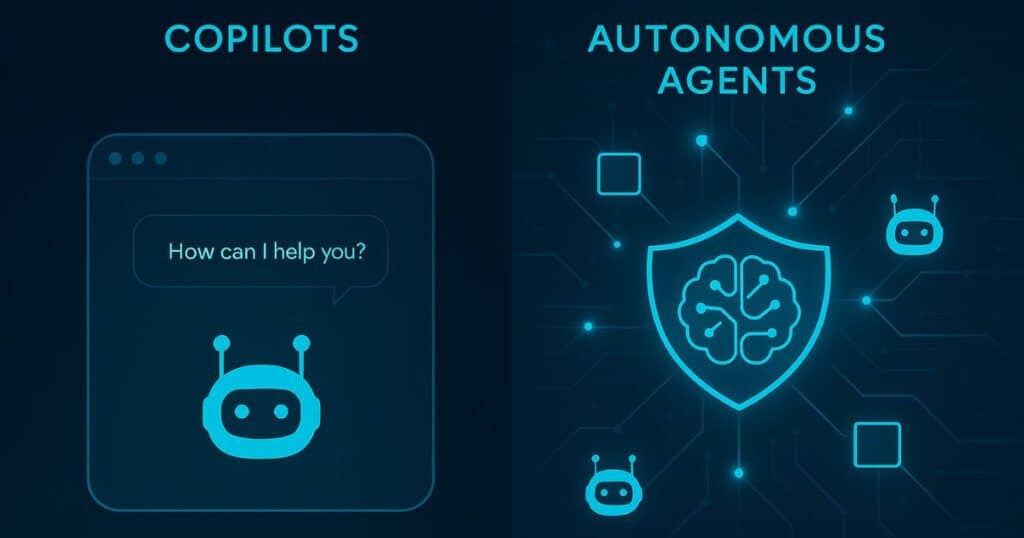
Beyond Copilots: Why AI Agents Are the Next Competitive Advantage
AI is no longer a tactical tool, it’s becoming the engine of enterprise transformation. While copilots and other generative AI tools have helped teams work faster, the real breakthrough is happening with AI agents: autonomous systems that don’t just assist but act, learn and orchestrate entire workflows across the business. The question every executive should be asking is: “How will we harness AI to create value at scale before our competitors do?” High-performing organisations aren’t waiting. They’re embedding AI agents into daily operations and seeing measurable impact; accelerated decision-making, leaner processes and stronger financial outcomes. When markets move at digital speed, standing still means falling behind. Here’s why: So, the question isn’t “Should we adopt AI?”, it’s “What could…

Zero Trust Networking
Protecting Employees Without Friction Your workforce is your greatest asset, and your greatest vulnerability. Attackers know this, which is why phishing and credential theft remain the most common entry points. But here’s the leadership challenge: how do you protect employees without slowing them down? Zero Trust answers that question by making security invisible yet uncompromising. Employees work from anywhere, home, client sites, airports, without clunky VPNs or endless password resets. Behind the scenes, every login is verified, every device assessed, every anomaly flagged. If something looks wrong, a compromised credential, an unusual location, the system reacts…
Shadow AI: Executive Briefing on Real Risks, Business Impact and Mitigation
Shadow AI is here, and it’s growing Shadow AI is the use of artificial intelligence tools and platforms outside the oversight of IT, security, or compliance teams. This is not a hypothetical concern. KPMG’s 2025 global survey found that up to 58% of employees are using AI productivity tools daily, and nearly half admit to uploading sensitive company information to unauthorised platforms. Only 41% of employees say their organisation has a policy guiding the use of generative AI, revealing a significant governance gap. The Risks Are Real and Substantial The evidence from leading analysts and recent incidents is clear:…

Cyber Resilience in 2025: From Tick-Box to Boardroom Imperative
What the NCSC’s 2025 Review Means for UK Businesses The National Cyber Security Centre’s (NCSC) 2025 Annual Review is a wake-up call for business leaders across the UK. The days when cyber security was simply an IT concern or a routine compliance task are over. With a record number of nationally significant cyber incidents handled in the past year (more than double the previous year’s figure), it is clear that cyber risks have become a central issue for organisational survival and national prosperity. The Evolving Threat: Why Businesses Can’t Afford Complacency No sector has been spared in the latest…
The 2025 State of Ransomware: Key Insights on Attacks, Costs, and Recovery
Ransomware continues to evolve — and so must our defenses. The State of Ransomware 2025 report from Sophos presents one of the most comprehensive views yet into how organisations around the world are being impacted by ransomware attacks. Based on an independent survey of 3,400 IT and cybersecurity leaders across 17 countries, the report explores how attacks are evolving, the operational weaknesses adversaries exploit, and the human and financial tolls that follow. Whether you’re building a cybersecurity strategy or assessing risk, this year’s findings offer crucial, real-world insights to guide your response. Key Findings from…

Outgrowing your MSP; businesses need a provider that scales with their growth
To stay competitive, business leaders must align with MSPs that deliver strategic value, drive innovation, and support to scale. Now firmly into 2025, it’s becoming clear what the year has in store for the IT landscape. For SMBs, the message is clear: business growth must be matched with smarter, more scalable managed services. The demand for cyber-resilient, cloud-first and AI-integrated solutions is no longer a forecast – it’s a reality already shaping business priorities. According to leading global technology market analyst firm Canalys’ MSP Trends 2025 report, the MSP model is transforming under growing pressure…