


Take a zero-tolerance approach to Cyber Hygiene
Although rapid deployment of remote working infrastructure, tools and software may have succeeded in supporting staff working from home during the pandemic, many organisations have suddenly been hit with the harsh reality that they actually failed to create a ‘cyber safe’ environment. In fact, it could be argued that the acceleration of digital transformation has, in turn, resulted in gaps, weak spots and lowered cyber defences. Malicious actors are continually adjusting tactics to exploit the most vulnerable targets, and during the pandemic gateways to new forms of data theft were opening in every direction. Each new VPN became an internet-exposed attack surface, and every piece of video-conferencing software posed new security risks. In fact, between the period of February and May 2020, the personal data of more than 500,000 video conferencing users were stolen and sold on the dark web. Attackers have been able to ‘Zoombomb’ online meetings, access sensitive information on unpatched devices and breach security software that haven’t been properly configured. Statistica states that during the first half of 2022, there were a staggering 236.1 million ransomware attacks worldwide. This came at a time when many companies were storing personal information and sensitive documents in the cloud for the first time. Of course, as an industry, we are fighting back to offer improved cyber security and cyber resilience. This has meant we are seeing increasing layer protection across all devices, applications, networks, and systems to keep data safe and ensure there’s the right levels of capacity and capability to detect, respond and recover from emerging threats and vulnerabilities.  Security experts are developing cutting-edge detection and interception technologies using automation and machine learning. This has the capability to transform cyber security in the near future. The downside? Criminals have access to the same technology, but with very different plans. Robust technology defences are a must to protect your business, but many of the recent attacks are targeted at your people, not your systems. This is backed up by the fact that 61% of all breaches involve user credentials. A new phenomenon has bred, as a result, the digital identity crisis, a world that involves hackers logging in with the company keys. Social engineering techniques depend on human error to provide access to valuable data and systems. Unsuspecting users are targeted on and offline with increasingly convincing phishing and vishing scams. And they are often successful because humans can be the weakest link in the security chain. Add to that the increased interruptions and distractions many have experienced – and still do – when working from home, along with the isolation from team members which increases stress levels for others. Your employee’s focus only needs to slip for a moment to open the door to a malicious actor. Your staff know this, and they feel vulnerable. This is upheld by the fact that 32% have noticed an increase in speculative criminal activity, and 19% of people working from home don’t feel they have the skills and training to stay safe. As businesses, we know the cyber hygiene processes that should be followed to maintain the health and safety of our networks and data, and the lapses exploited during the pandemic have been a reminder that these simple but critical precautions can’t be rushed, delayed or overlooked. For example, patches and updates should be applied rapidly, backups should take place regularly, and firewalls and security software should be properly configured. Access privileges should be reviewed, incident response plans should be updated, and security awareness training should be comprehensive and ongoing. The complex environment created by mass remote working has turned every server, device, application and employee into a potential attack vector. But those aren’t the only risks associated with your revenue stream. In an increasingly connected business landscape, the security effectiveness of every partner and supplier should be considered. In one survey, 88% of respondents are concerned about the cyber resilience of SMEs in their supply chain. Thereby, it’s no longer just about closing the security gaps to protect yourself from financial, legal and reputational damage – if you can’t prove high levels of detection and protection, you could be considered an unmitigated risk, and lose out to someone who can.
You may be interested in
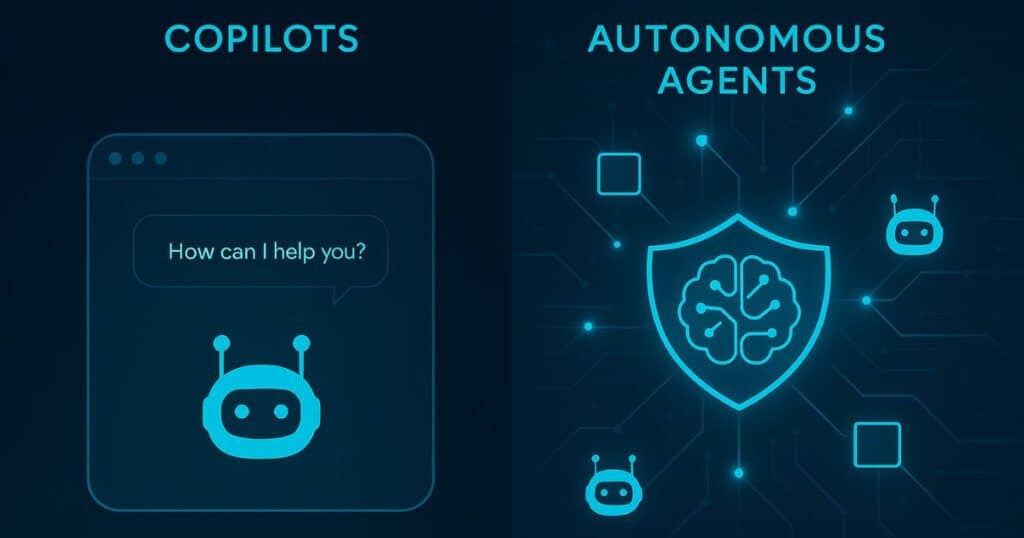
Beyond Copilots: Why AI Agents Are the Next Competitive Advantage
AI is no longer a tactical tool, it’s becoming the engine of enterprise transformation. While copilots and other generative AI tools have helped teams work faster, the real breakthrough is happening with AI agents: autonomous systems that don’t just assist but act, learn and orchestrate entire workflows across the business. The question every executive should be asking is: “How will we harness AI to create value at scale before our competitors do?” High-performing organisations aren’t waiting. They’re embedding AI agents into daily operations and seeing measurable impact; accelerated decision-making, leaner processes and stronger financial outcomes. When markets move at digital speed, standing still means falling behind. Here’s why: So, the question isn’t “Should we adopt AI?”, it’s “What could…
Zero Trust Networking
Protecting Employees Without Friction Your workforce is your greatest asset, and your greatest vulnerability. Attackers know this, which is why phishing and credential theft remain the most common entry points. But here’s the leadership challenge: how do you protect employees without slowing them down? Zero Trust answers that question by making security invisible yet uncompromising. Employees work from anywhere, home, client sites, airports, without clunky VPNs or endless password resets. Behind the scenes, every login is verified, every device assessed, every anomaly flagged. If something looks wrong, a compromised credential, an unusual location, the system reacts…
Shadow AI: Executive Briefing on Real Risks, Business Impact and Mitigation
Shadow AI is here, and it’s growing Shadow AI is the use of artificial intelligence tools and platforms outside the oversight of IT, security, or compliance teams. This is not a hypothetical concern. KPMG’s 2025 global survey found that up to 58% of employees are using AI productivity tools daily, and nearly half admit to uploading sensitive company information to unauthorised platforms. Only 41% of employees say their organisation has a policy guiding the use of generative AI, revealing a significant governance gap. The Risks Are Real and Substantial The evidence from leading analysts and recent incidents is clear:…
Cyber Resilience in 2025: From Tick-Box to Boardroom Imperative
What the NCSC’s 2025 Review Means for UK Businesses The National Cyber Security Centre’s (NCSC) 2025 Annual Review is a wake-up call for business leaders across the UK. The days when cyber security was simply an IT concern or a routine compliance task are over. With a record number of nationally significant cyber incidents handled in the past year (more than double the previous year’s figure), it is clear that cyber risks have become a central issue for organisational survival and national prosperity. The Evolving Threat: Why Businesses Can’t Afford Complacency No sector has been spared in the latest…

Is Your MSP Really Helping You Grow — Or Just Keeping the Lights On?
There’s a moment in every business where the question quietly surfaces: “Are we getting what we really need from our IT provider?” It’s not always easy to answer. On the surface, things seem fine. Tickets are resolved. Reports arrive. There’s someone to call when things go wrong. It’s familiar. It’s comfortable. And that comfort can be deceiving. Because beneath the surface, many organisations are stuck in a service relationship that feels safe — but is actually stagnant. And here’s the truth: comfort isn’t the same as progress. For many, the idea of changing MSPs or challenging the…
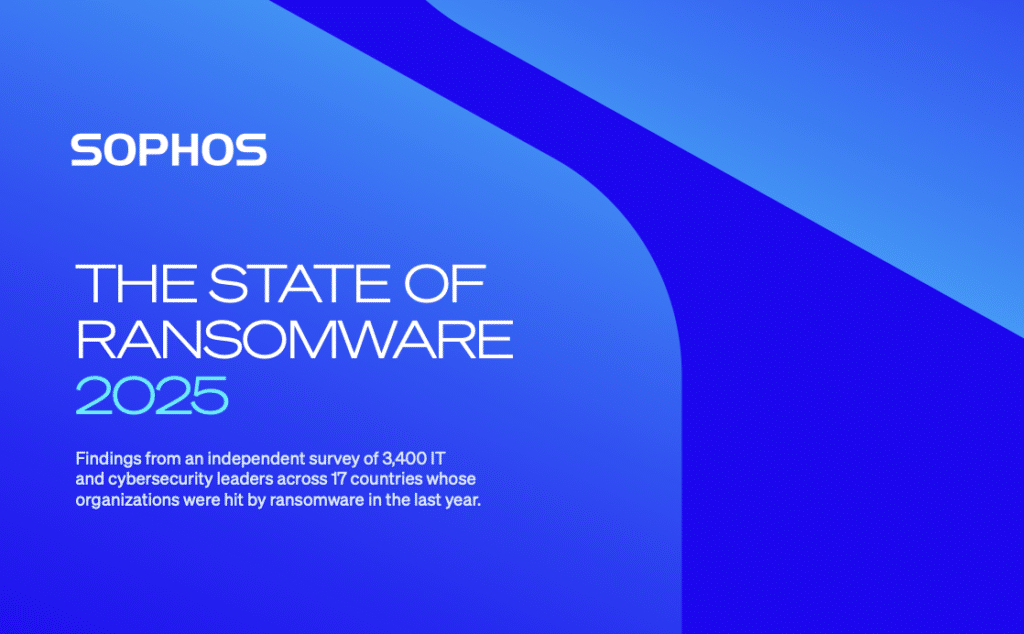
The 2025 State of Ransomware: Key Insights on Attacks, Costs, and Recovery
Ransomware continues to evolve — and so must our defenses. The State of Ransomware 2025 report from Sophos presents one of the most comprehensive views yet into how organisations around the world are being impacted by ransomware attacks. Based on an independent survey of 3,400 IT and cybersecurity leaders across 17 countries, the report explores how attacks are evolving, the operational weaknesses adversaries exploit, and the human and financial tolls that follow. Whether you’re building a cybersecurity strategy or assessing risk, this year’s findings offer crucial, real-world insights to guide your response. Key Findings from…