


Fortify and Reassure with Compliance and Cybersecurity Synergy

Persistent cyber threats, rapidly changing technology, and the growing array of regulations have heightened the need for alignment between cybersecurity and compliance management. In its annual Digital Defence Report, Microsoft has sounded the alarm on the escalating number of cyberattacks with a 2.75-fold increase in ransomware attacks year-on-year and tech scams rising by 400% since 2022.
“In the world of business, you’ll inevitably hear about the many ways to beef up your cybersecurity to secure your boundaries and data. The higher level of sophistication in todays cyber-attacks, means there is even more expectation on a governance framework to be able to counter them,” said Richard Puckey, Head of Compliance at Espria.
“Leaders within these sectors are now at a crossroads; focusing on developing agile cybersecurity or strengthening their compliance framework. However, this perceived dilemma could actually be an opportunity to move away from compartmentalising the two strategies and merge both into a cohesive system where each supports the other.
“Blanket compliance without shaping to meet the specific requirements of the organisation diminishes its value. Governance frameworks must be modular to accommodate for different proprietary technologies and rising threats. An approach to this effect will provide a well-rounded system whereby compliance becomes part and parcel of the overall security strategy.”
Puckey adds that “regularly reviewing and enhancing internal governance frameworks can provide an invaluable opportunity to identify unknown vulnerabilities and refine policies.
“As organisations continue to embrace advanced technologies and integrate digital tools, they open a wider, dynamic regulatory landscape that expands the avenues threat actors are able use to compromise the corporate network. These gaps can be overlooked in traditional security setups, leaving holes within your framework.
“During compliance reviews, existing processes are evaluated to see whether they are valid or as effective as they could be. This can give businesses the opportunity to improve these areas, smoothing out inefficiencies and resolving minor issues that had gone unnoticed or were being managed with workarounds.
“Would these issues be identified without going through the certification process? Possibly, but it’s likely that they would have remained low priority in the face of more immediate concerns and potentially unravel into larger issues down the line.”
These benefits aren’t just internal – a dual focus on regulatory compliance and cybersecurity can demonstrate a clear commitment to the safety of customer data and help to attract new business leads.
“One question that often arises is whether the time and money spent on obtaining certifications is worthwhile or just an ‘investment in paper.’ But all good relationships are built on trust and customers are increasingly looking for proof of strong security and compliance to ensure their data is safe,” said Puckey.
“An effective cyber security strategy can act as the frontline defence against data breaches, reducing the risk of non-compliance and potential legal consequences. Coupled with regular risk assessments and maintaining consistent audit trails, organisations can signal their commitment to protect customer data and demonstrate their trustworthiness to the clients and stakeholders.”
While mastering this process is essential, it can be complex, but Managed Service Providers (MSPs) such as Espria, emerge as an indispensable partner in the modern business landscape.
“Navigating diverse regulations and complex cyber environments demands specialised knowledge and if misinterpreted, can lead to hefty penalties. MSP’s offer invaluable expertise to help businesses implement offerings tailored to the specific industry you function in, and create a secure, compliant work environment. This cost-effective solution provides expertise and dedicated tools that support long-term strategic goals without the need for major capital investment.”
Puckey concluded, “New cyber security threats are introduced every day and a single breach can damage your company’s reputation. When they are planned and executed correctly, compliance standards can be an invaluable tool when paired with a broader security strategy.
This alignment allows companies to stay agile in the face of evolving threats while demonstrating their commitment to safeguarding customer data.”
You may be interested in
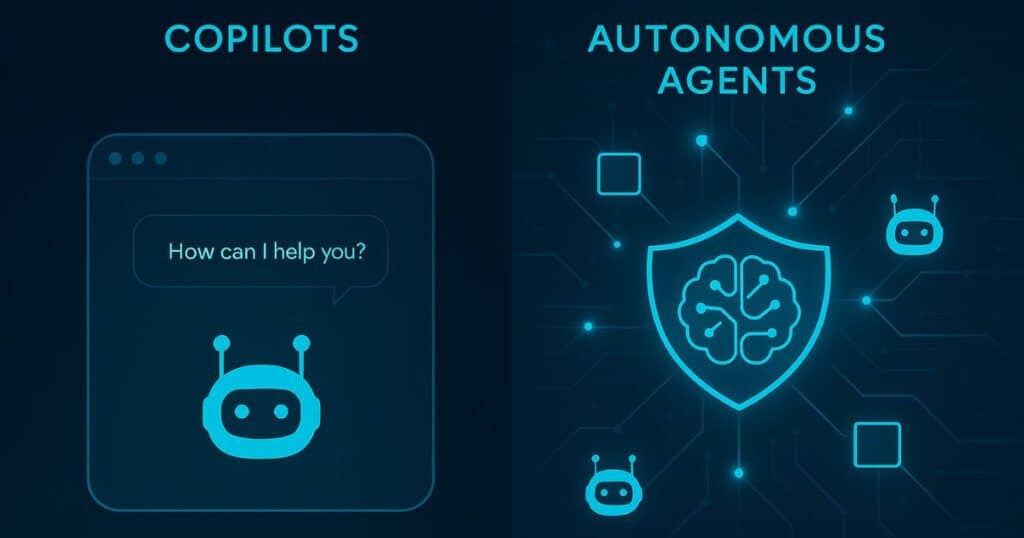
Beyond Copilots: Why AI Agents Are the Next Competitive Advantage
AI is no longer a tactical tool, it’s becoming the engine of enterprise transformation. While copilots and other generative AI tools have helped teams work faster, the real breakthrough is happening with AI agents: autonomous systems that don’t just assist but act, learn and orchestrate entire workflows across the business. The question every executive should be asking is: “How will we harness AI to create value at scale before our competitors do?” High-performing organisations aren’t waiting. They’re embedding AI agents into daily operations and seeing measurable impact; accelerated decision-making, leaner processes and stronger financial outcomes. When markets move at digital speed, standing still means falling behind. Here’s why: So, the question isn’t “Should we adopt AI?”, it’s “What could…

Zero Trust Networking
Protecting Employees Without Friction Your workforce is your greatest asset, and your greatest vulnerability. Attackers know this, which is why phishing and credential theft remain the most common entry points. But here’s the leadership challenge: how do you protect employees without slowing them down? Zero Trust answers that question by making security invisible yet uncompromising. Employees work from anywhere, home, client sites, airports, without clunky VPNs or endless password resets. Behind the scenes, every login is verified, every device assessed, every anomaly flagged. If something looks wrong, a compromised credential, an unusual location, the system reacts…

Shadow AI: Executive Briefing on Real Risks, Business Impact and Mitigation
Shadow AI is here, and it’s growing Shadow AI is the use of artificial intelligence tools and platforms outside the oversight of IT, security, or compliance teams. This is not a hypothetical concern. KPMG’s 2025 global survey found that up to 58% of employees are using AI productivity tools daily, and nearly half admit to uploading sensitive company information to unauthorised platforms. Only 41% of employees say their organisation has a policy guiding the use of generative AI, revealing a significant governance gap. The Risks Are Real and Substantial The evidence from leading analysts and recent incidents is clear:…

Cyber Resilience in 2025: From Tick-Box to Boardroom Imperative
What the NCSC’s 2025 Review Means for UK Businesses The National Cyber Security Centre’s (NCSC) 2025 Annual Review is a wake-up call for business leaders across the UK. The days when cyber security was simply an IT concern or a routine compliance task are over. With a record number of nationally significant cyber incidents handled in the past year (more than double the previous year’s figure), it is clear that cyber risks have become a central issue for organisational survival and national prosperity. The Evolving Threat: Why Businesses Can’t Afford Complacency No sector has been spared in the latest…

Is Your MSP Really Helping You Grow — Or Just Keeping the Lights On?
There’s a moment in every business where the question quietly surfaces: “Are we getting what we really need from our IT provider?” It’s not always easy to answer. On the surface, things seem fine. Tickets are resolved. Reports arrive. There’s someone to call when things go wrong. It’s familiar. It’s comfortable. And that comfort can be deceiving. Because beneath the surface, many organisations are stuck in a service relationship that feels safe — but is actually stagnant. And here’s the truth: comfort isn’t the same as progress. For many, the idea of changing MSPs or challenging the…
The 2025 State of Ransomware: Key Insights on Attacks, Costs, and Recovery
Ransomware continues to evolve — and so must our defenses. The State of Ransomware 2025 report from Sophos presents one of the most comprehensive views yet into how organisations around the world are being impacted by ransomware attacks. Based on an independent survey of 3,400 IT and cybersecurity leaders across 17 countries, the report explores how attacks are evolving, the operational weaknesses adversaries exploit, and the human and financial tolls that follow. Whether you’re building a cybersecurity strategy or assessing risk, this year’s findings offer crucial, real-world insights to guide your response. Key Findings from…