


The Development Bank of Wales – Managing a Laptop Refresh Project

The Client
The Development Bank of Wales is a public sector finance company employing almost 300 people in the provision of finance for businesses based in Wales. It finances businesses that stand to contribute financially, socially, ethically and environmentally to communities in Wales and to the wider world.

The Project
Espria were engaged to manage a laptop refresh project. Seemingly simple on the surface, this project was large, multi-staged and across multiple sites. There was also a basic requirement that every end-user was provided with a new device exactly mirroring their previous one to ensure business continuity and employee efficiency. Due to the scale of the project, the Development Bank engaged the Espria PMaaS team to manage the rollout including staff communications and scheduling.
It was understood from the outset that laptops, whilst a business device, contain personal information as well as personal set up and legacy software peculiar to the individual end-user. The need for each end-user to face minimal disruption in their work was a further requirement – tech is a sensitive area, and the need to minimise potential frustrations with applications not working as expected was high.
Approach
The Espria Project Manager, working very closely with the Service Delivery Manager scoped out the first stage of the project; the refresh of 81 laptops, and established a process and timing plan, including set-up by individual and existing content. Working closely with the Development Bank’s IT team, the Espria team engaged with internal managers and team leaders to profile groups of end-users with similar set-ups to provide efficiencies and to ensure absolute alignment over who was getting what, identifying legacy applications, set-up and content for transfer and also barred apps.

Prior to roll-out, all end-user data was uploaded to the Cloud (Microsoft Office 365) so it could be synched back down to the new device on implementation. All the devices were arranged to undergo a prior base-build off-site using Intune Autopilot and bulk shipped to each DBW location for consultant installation on site.
The Espria consultants remained on-site, at each office for the duration of the implementation, supported by a Project Manager (in Cardiff, for 2 full days) to ensure the roll-out was efficient, ran smoothly and pinch-points identified and addressed. The Development Bank understood the profile of their staff and requested experienced consultants in the on-site roll-out with not only the technical, but also people skills needed to manage the transition from old to new. They had invested in top quality laptops with the expectation they last 4 – 5 years. This high specification had naturally generated much excitement amongst end-users; the use of such a business-critical tool and it’s set up is a very personal thing and therefore Espria were happy to manage this roll-out with highly experienced personnel.
The change-overs were set up in blocks to establish an effective and sustainable process before rolling out at scale. To facilitate this the Espria PMaaS team used the Microsoft Bookings app which allowed staff to book their own handover and replacement appointments based on the profile groups already identified.
The most experienced engineers, with excellent inter-personal skills and attention to detail ensured end-users had a like for like look and feel with their new devices. Understanding the human angle to this implementation project was key to its success – The Project Manager made herself available on-site to ensure each individual’s personal requirements were met, ensuring satisfaction levels were not only high but maintained. This also cemented customer confidence in the Espria project team and our capabilities as a provider.
In the weeks following the on-site roll-out a further 9 remote change-overs were planned in, managed and implemented including old laptop collection and new device delivery.
All old devices were held securely for 30 days prior to being wiped and returned to DBW. An Implementation Review, following Phase One was held which informed how the process could be improved to Phase Two including changes to the Build Process Document and a number of other internal processes.
The Outcome
Satisfaction levels were VERY high mainly due to the high level of resource, managing end-user interaction and seamless project management. Following the successful management of this project, the Development Bank of Wales has engaged Espria PMaaS for Phase Two where a further 64 devices using the proven model will be switched out.
Reveal areas that need proactive, defensive or collaborative resource
One of our experts will review your current data risk, examine current governance and security controls.
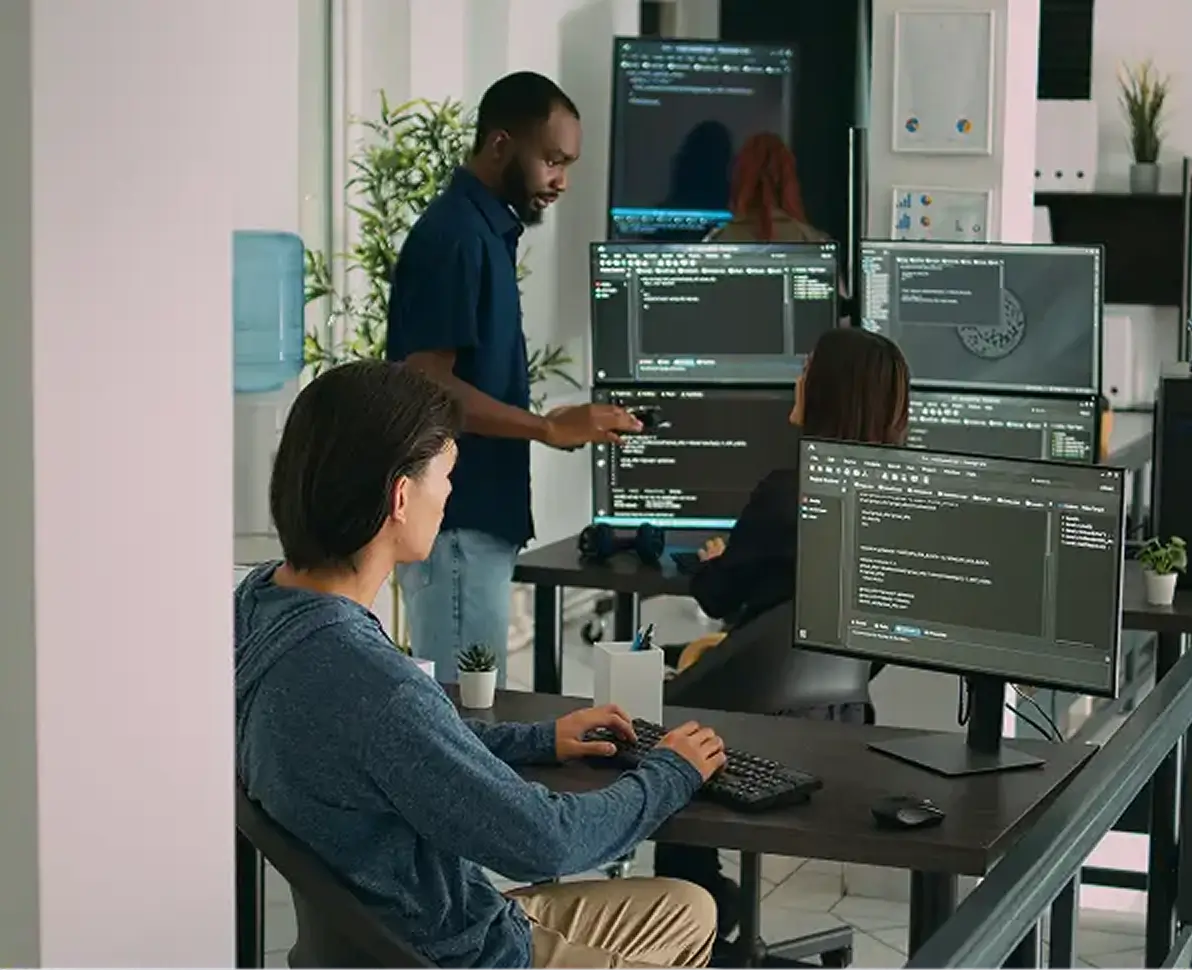

We’re experts in building sustainable IT infrastructure that can scale to your businesses needs.
You may be interested in
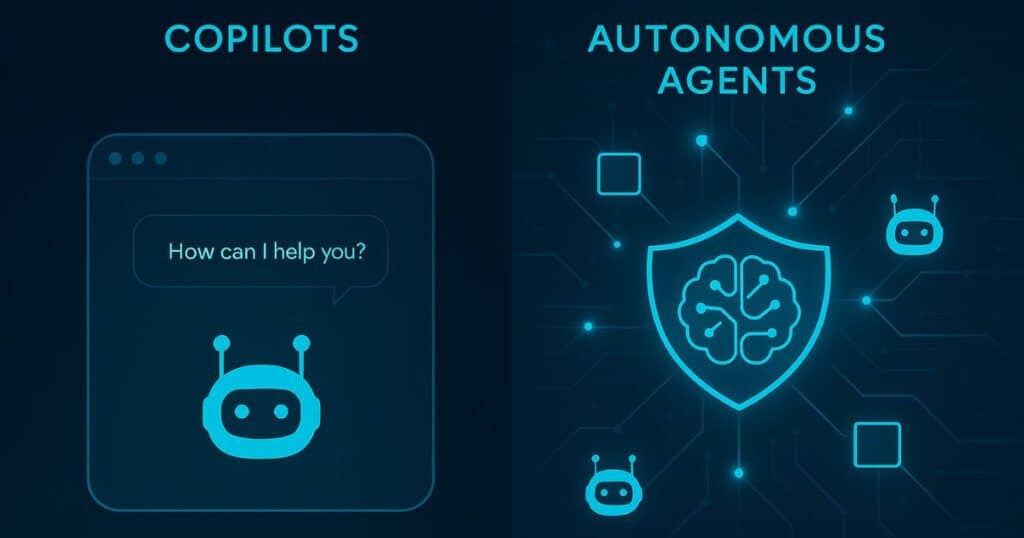
Beyond Copilots: Why AI Agents Are the Next Competitive Advantage
AI is no longer a tactical tool, it’s becoming the engine of enterprise transformation. While copilots and other generative AI tools have helped teams work faster, the real breakthrough is happening with AI agents: autonomous systems that don’t just assist but act, learn and orchestrate entire workflows across the business. The question every executive should be asking is: “How will we harness AI to create value at scale before our competitors do?” High-performing organisations aren’t waiting. They’re embedding AI agents into daily operations and seeing measurable impact; accelerated decision-making, leaner processes and stronger financial outcomes. When markets move at digital speed, standing still means falling behind. Here’s why: So, the question isn’t “Should we adopt AI?”, it’s “What could…

Zero Trust Networking
Protecting Employees Without Friction Your workforce is your greatest asset, and your greatest vulnerability. Attackers know this, which is why phishing and credential theft remain the most common entry points. But here’s the leadership challenge: how do you protect employees without slowing them down? Zero Trust answers that question by making security invisible yet uncompromising. Employees work from anywhere, home, client sites, airports, without clunky VPNs or endless password resets. Behind the scenes, every login is verified, every device assessed, every anomaly flagged. If something looks wrong, a compromised credential, an unusual location, the system reacts…
Shadow AI: Executive Briefing on Real Risks, Business Impact and Mitigation
Shadow AI is here, and it’s growing Shadow AI is the use of artificial intelligence tools and platforms outside the oversight of IT, security, or compliance teams. This is not a hypothetical concern. KPMG’s 2025 global survey found that up to 58% of employees are using AI productivity tools daily, and nearly half admit to uploading sensitive company information to unauthorised platforms. Only 41% of employees say their organisation has a policy guiding the use of generative AI, revealing a significant governance gap. The Risks Are Real and Substantial The evidence from leading analysts and recent incidents is clear:…

Cyber Resilience in 2025: From Tick-Box to Boardroom Imperative
What the NCSC’s 2025 Review Means for UK Businesses The National Cyber Security Centre’s (NCSC) 2025 Annual Review is a wake-up call for business leaders across the UK. The days when cyber security was simply an IT concern or a routine compliance task are over. With a record number of nationally significant cyber incidents handled in the past year (more than double the previous year’s figure), it is clear that cyber risks have become a central issue for organisational survival and national prosperity. The Evolving Threat: Why Businesses Can’t Afford Complacency No sector has been spared in the latest…

Is Your MSP Really Helping You Grow — Or Just Keeping the Lights On?
There’s a moment in every business where the question quietly surfaces: “Are we getting what we really need from our IT provider?” It’s not always easy to answer. On the surface, things seem fine. Tickets are resolved. Reports arrive. There’s someone to call when things go wrong. It’s familiar. It’s comfortable. And that comfort can be deceiving. Because beneath the surface, many organisations are stuck in a service relationship that feels safe — but is actually stagnant. And here’s the truth: comfort isn’t the same as progress. For many, the idea of changing MSPs or challenging the…
The 2025 State of Ransomware: Key Insights on Attacks, Costs, and Recovery
Ransomware continues to evolve — and so must our defenses. The State of Ransomware 2025 report from Sophos presents one of the most comprehensive views yet into how organisations around the world are being impacted by ransomware attacks. Based on an independent survey of 3,400 IT and cybersecurity leaders across 17 countries, the report explores how attacks are evolving, the operational weaknesses adversaries exploit, and the human and financial tolls that follow. Whether you’re building a cybersecurity strategy or assessing risk, this year’s findings offer crucial, real-world insights to guide your response. Key Findings from…