


Customer Acquisition Trends in a Post-Pandemic World – Author, Alex Tupman CEO

After the abrupt shift to home working in 2020, last year saw many organisations successfully adapt to digital delivery of their services. Whether they were simply accelerating an existing digital transformation or starting from scratch, many discovered that with the right technology their teams could effectively collaborate, achieve high productivity and continue to support customers virtually, from wherever they were. Customers embraced the video call as an alternative to in-person contact. Video meetings were rapidly scheduled, company backgrounds were created, and previously unused cameras were switched on. Video calls were normalised overnight in a way that wouldn’t have happened without the pandemic as a catalyst. Working virtually works Along with convenience, lower costs, and wasted travel time becoming valuable work time, we’ve got good at video calls. With a structured agenda, virtual interactions are often quicker and more efficient than face to face meetings. And with less of a social element, we get more work done. There was already a growing trend towards managing customer relationships virtually pre-Covid. Digital interactions from e-tenders to self-service capabilities were becoming the norm. At the height of the pandemic, it wasn’t just online account maintenance that customers accepted – customer acquisition was forced to go digital. Sales teams utilized many of their traditional core sales skills when meeting customers and closing deals by video and live chat interactions. But just as account teams have perfected their online craft, face to face interactions are returning.  Back to the (sanitised) handshake There are some things that just work better face to face, and customer acquisition is often one of them. While quick, regular check-ins will remain a convenient and productive option for existing customers, new clients will be less willing to sign on that initial dotted line with a digital signature when in-person meetings are a viable option once more. Business relationships are based on trust, and we instinctively prefer to look each other in the eye while we establish our first deal. While virtual interactions are ideal for maintaining existing customer relationships, there’s no doubt that it’s harder to establish new ones if the buyer and seller meet over Zoom rather than coffee. Here’s why:
- Complex interactive meetings work better in person. Getting a large and diverse group of stakeholders, influencers and account team members together to ensure a complete understanding of a complex situation works better face to face. It’s easier to raise points, questions and potential objections as they come up, and conversation is more fluid without the stop/start of virtual interruptions.
- You can’t properly read the Zoom room. Reading the expression of a grid of unknown thumbnail faces doesn’t always tell you what you need to know. Building rapport relies on body language, eye contact, tone of voice and other subtle non-verbal cues that tell you when a pitch or negotiation is going well (or isn’t).
- Sometimes small talk gets big results. An unguarded, off-hand comment on the way out the door can often uncover a critical point or an additional opportunity. Digital interactions don’t usually provide the time or space for that informality.
- Encouraging innovation and creative brilliance. Brainstorming a new solution to difficult customer problems often requires spontaneous and unstructured interactions. We’ve all been in the room where ideas have bounced around naturally to create something exceptional.
The Deloitte Corporate Travel Survey 2021 indicates that while we will continue to rely on virtual communication and e-commerce for simple customer transactions, business travel related to external relationships – in particular client acquisition – will be the first to return to pre-pandemic levels. But be aware – when you’ve made the journey to get that crucial signature, your client will still expect you to be fully connected with instant access to your team and resources back at the office. Those same digital resources will still be needed to support a successful return to face to face engagement. 2022: Optimizing omnichannel excellence The business landscape has changed. Accenture’s recent report, ‘A new era in customer engagement’ details how customer expectations of what constitutes basic digital capabilities have shifted permanently. Convenience, ease of access and ‘anywhere anytime’ interactions are the new normal. The winners in this new hybrid environment will be the ones who find an optimal balance of traditional channels, digital interaction and in person engagement, and move seamlessly between them to improve customer experience in a post-pandemic world. Being agile and responsive gives you the fluidity you need to support your clients in a fast, efficient way. Mode’s fully managed IT and digital workspace solutions combine multiple business communication tools, utilising the power of the cloud. They simplify the way your teams operate, support collaborative working, and improve your business flexibility and efficiency.
Subsribe for updates and our latest research
You may be interested in
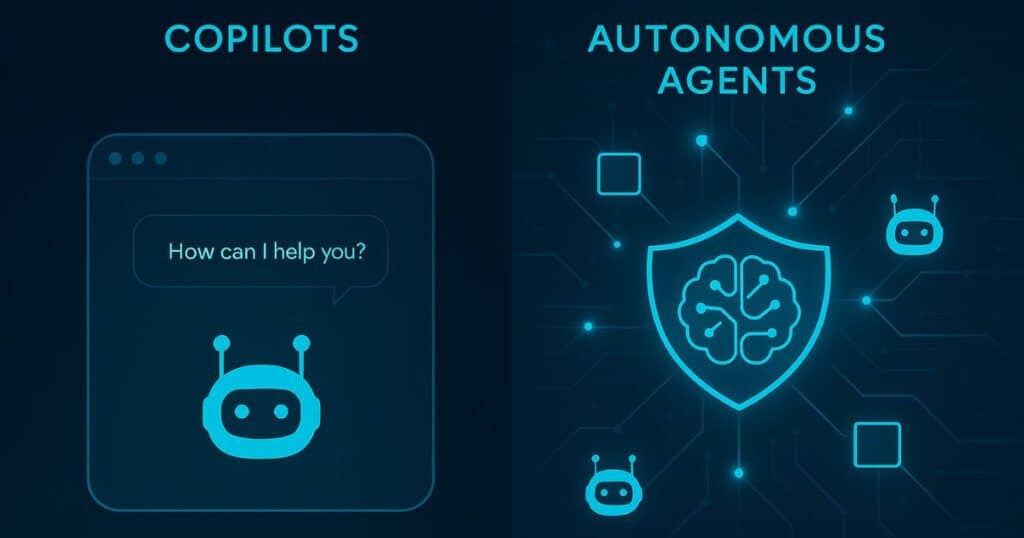
Beyond Copilots: Why AI Agents Are the Next Competitive Advantage
AI is no longer a tactical tool, it’s becoming the engine of enterprise transformation. While copilots and other generative AI tools have helped teams work faster, the real breakthrough is happening with AI agents: autonomous systems that don’t just assist but act, learn and orchestrate entire workflows across the business. The question every executive should be asking is: “How will we harness AI to create value at scale before our competitors do?” High-performing organisations aren’t waiting. They’re embedding AI agents into daily operations and seeing measurable impact; accelerated decision-making, leaner processes and stronger financial outcomes. When markets move at digital speed, standing still means falling behind. Here’s why: So, the question isn’t “Should we adopt AI?”, it’s “What could…
Zero Trust Networking
Protecting Employees Without Friction Your workforce is your greatest asset, and your greatest vulnerability. Attackers know this, which is why phishing and credential theft remain the most common entry points. But here’s the leadership challenge: how do you protect employees without slowing them down? Zero Trust answers that question by making security invisible yet uncompromising. Employees work from anywhere, home, client sites, airports, without clunky VPNs or endless password resets. Behind the scenes, every login is verified, every device assessed, every anomaly flagged. If something looks wrong, a compromised credential, an unusual location, the system reacts…
Shadow AI: Executive Briefing on Real Risks, Business Impact and Mitigation
Shadow AI is here, and it’s growing Shadow AI is the use of artificial intelligence tools and platforms outside the oversight of IT, security, or compliance teams. This is not a hypothetical concern. KPMG’s 2025 global survey found that up to 58% of employees are using AI productivity tools daily, and nearly half admit to uploading sensitive company information to unauthorised platforms. Only 41% of employees say their organisation has a policy guiding the use of generative AI, revealing a significant governance gap. The Risks Are Real and Substantial The evidence from leading analysts and recent incidents is clear:…

Cyber Resilience in 2025: From Tick-Box to Boardroom Imperative
What the NCSC’s 2025 Review Means for UK Businesses The National Cyber Security Centre’s (NCSC) 2025 Annual Review is a wake-up call for business leaders across the UK. The days when cyber security was simply an IT concern or a routine compliance task are over. With a record number of nationally significant cyber incidents handled in the past year (more than double the previous year’s figure), it is clear that cyber risks have become a central issue for organisational survival and national prosperity. The Evolving Threat: Why Businesses Can’t Afford Complacency No sector has been spared in the latest…

Is Your MSP Really Helping You Grow — Or Just Keeping the Lights On?
There’s a moment in every business where the question quietly surfaces: “Are we getting what we really need from our IT provider?” It’s not always easy to answer. On the surface, things seem fine. Tickets are resolved. Reports arrive. There’s someone to call when things go wrong. It’s familiar. It’s comfortable. And that comfort can be deceiving. Because beneath the surface, many organisations are stuck in a service relationship that feels safe — but is actually stagnant. And here’s the truth: comfort isn’t the same as progress. For many, the idea of changing MSPs or challenging the…
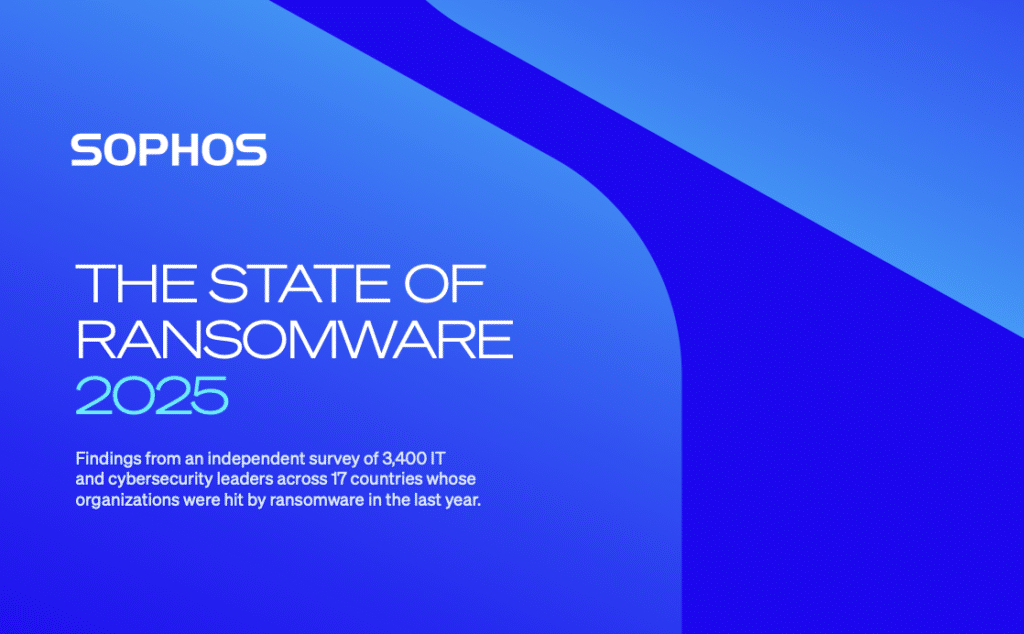
The 2025 State of Ransomware: Key Insights on Attacks, Costs, and Recovery
Ransomware continues to evolve — and so must our defenses. The State of Ransomware 2025 report from Sophos presents one of the most comprehensive views yet into how organisations around the world are being impacted by ransomware attacks. Based on an independent survey of 3,400 IT and cybersecurity leaders across 17 countries, the report explores how attacks are evolving, the operational weaknesses adversaries exploit, and the human and financial tolls that follow. Whether you’re building a cybersecurity strategy or assessing risk, this year’s findings offer crucial, real-world insights to guide your response. Key Findings from…