


Building a security-first framework against evolving cyberthreats

Written by Brian Sibley, Virtual CTO at Espria
As the UK’s network and cloud security market evolves at an unprecedented pace, businesses face a barrage of sophisticated cyber threats and tightening regulations. Connectivity across business infrastructure has created an enormous attack surface for organisations of all sizes, meaning that cyber risk is undoubtedly a business risk at every level. The era of selling security products as an add-on is over; managed service providers must now redefine their role from purely IT consultants and suppliers of managed services to indispensable security partners, delivering true, measurable cyber resilience.
This presents a huge opportunity for the channel. With UK businesses becoming increasingly and acutely conscious of security postures, many are realising their lack of resources to act upon it. SMEs are playing catch-up on issues they should have prepared for years in advance, grappling with limited budgets, lack of specialist talent and even lingering hope and a false sense of security – “we’re too small to target, it won’t happen to us.”
This perception could not be more wrong. SMEs are, in fact, low-hanging fruit for automated threats and opportunistic actors that don’t care about a security sob story. A significant breach is not just a minor inconvenience; it is an existential threat. However, with the right MSP and a security-first approach, business leaders can bridge the gap, going beyond simple compliance checklists to actively reduce risk and protect business continuity.
Security can no longer be an afterthought
Where in the past, security was considered merely an important consideration, today it must be the priority – a central pillar of service delivery, integral to everything. Becoming a true security-first partner begins with a radical internal transformation, and that in itself demands not just a technical adjustment but a shift in culture and mindset.
Ensuring that businesses stay ahead of cyber threats demands a move away from legacy toolsets towards a standardised, modern architecture, including Zero Trust, Managed Detection and Response and automation. Businesses need a services partner who knows how to invest in greater proactive monitoring and threat neutralisation capabilities, stunting potential attacks before they can become critical issues.
Harnessing AI as a force multiplier and embracing it across the channel as a practical tool for democratised security is critical as well. AI should be used as a tool to empower analysts, automate remediation and aid in predicting vulnerabilities to complement the skills of human threat hunters. Through this, currently underserved SMEs can access enterprise-grade, cost-effective security to scale.
The only viable defence: automated, intelligent and proactive
Incident management has reached a point where managing the sheer volume of security alerts generated by modern IT environments is no longer sustainable. For a human-only team, it is impossible to manage effectively, often leading instead to analyst burnout and threats slipping through the cracks. Investment in a dedicated automation team, aligned with Cloud Adoption frameworks, is crucial at this stage. Those who can shift their mindset to delivering resilience across their security approach are the ones who scale fastest.
A business’s investment must be targeted at building a proactive defence. Deploying intelligent MDR solutions, through partnerships with Sophos or similar security experts, can go beyond just flagging anomalies but also actively neutralise threats before they become critical issues. This focus on intelligent, proactive defence is a direct response to the modern threat landscape.
From AI-driven threats and supply chain vulnerabilities to the rise of Ransomware-as-a-Service (RaaS), allowing cyber actors to literally outsource their own attacks, businesses need to feel armed with tools providing better efficiency, fewer false positives, and more value for partners choosing the right managed services partner.
From compliance to the cloud, reseller to resilience partner
The demand for robust MDR, Secure Access Service Edge (SASE) offerings and compliance-driven solutions is not a future trend. With growing regulations and necessary certifications raising the stakes for what businesses need to offer and cover, such as with NIS2 and Cyber Essentials Plus, businesses need security-as-a-service models that can guarantee continuous compliance.
Yet we can’t get complacent and stop there. Cloud security, AI-driven threat response and managed identity and access management are key areas of growth. In the hybrid world of work, identity and access are the new perimeter. Securing the present and building future capabilities of the defences of the future is key.
For channel businesses, the knowledge gap is the biggest challenge to overcome. Alongside embedding security in every service and investing in automation, this means committing to continuous education for both internal teams and clients as the foundation of a true security-first culture. Many still view security as a complex, standalone discipline rather than something that should be baked into all IT services, taking a ‘secure by design’ approach. An expert must challenge and educate that mindset.
Businesses need a trusted partner who keeps them safe, compliant and operational in an ever-changing threat landscape. Stop simply selling products and start delivering resilience.
You may be interested in
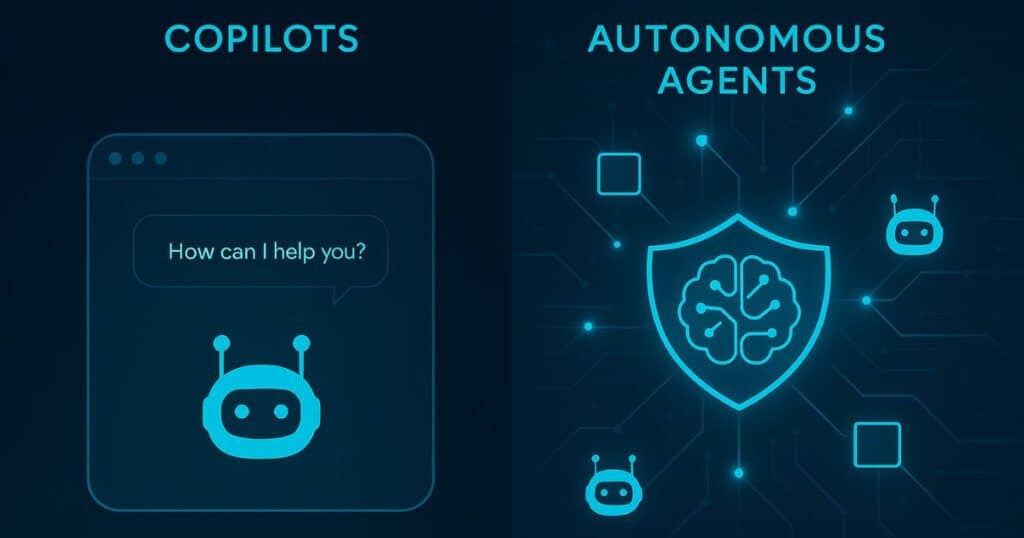
Beyond Copilots: Why AI Agents Are the Next Competitive Advantage
AI is no longer a tactical tool, it’s becoming the engine of enterprise transformation. While copilots and other generative AI tools have helped teams work faster, the real breakthrough is happening with AI agents: autonomous systems that don’t just assist but act, learn and orchestrate entire workflows across the business. The question every executive should be asking is: “How will we harness AI to create value at scale before our competitors do?” High-performing organisations aren’t waiting. They’re embedding AI agents into daily operations and seeing measurable impact; accelerated decision-making, leaner processes and stronger financial outcomes. When markets move at digital speed, standing still means falling behind. Here’s why: So, the question isn’t “Should we adopt AI?”, it’s “What could…
Zero Trust Networking
Protecting Employees Without Friction Your workforce is your greatest asset, and your greatest vulnerability. Attackers know this, which is why phishing and credential theft remain the most common entry points. But here’s the leadership challenge: how do you protect employees without slowing them down? Zero Trust answers that question by making security invisible yet uncompromising. Employees work from anywhere, home, client sites, airports, without clunky VPNs or endless password resets. Behind the scenes, every login is verified, every device assessed, every anomaly flagged. If something looks wrong, a compromised credential, an unusual location, the system reacts…
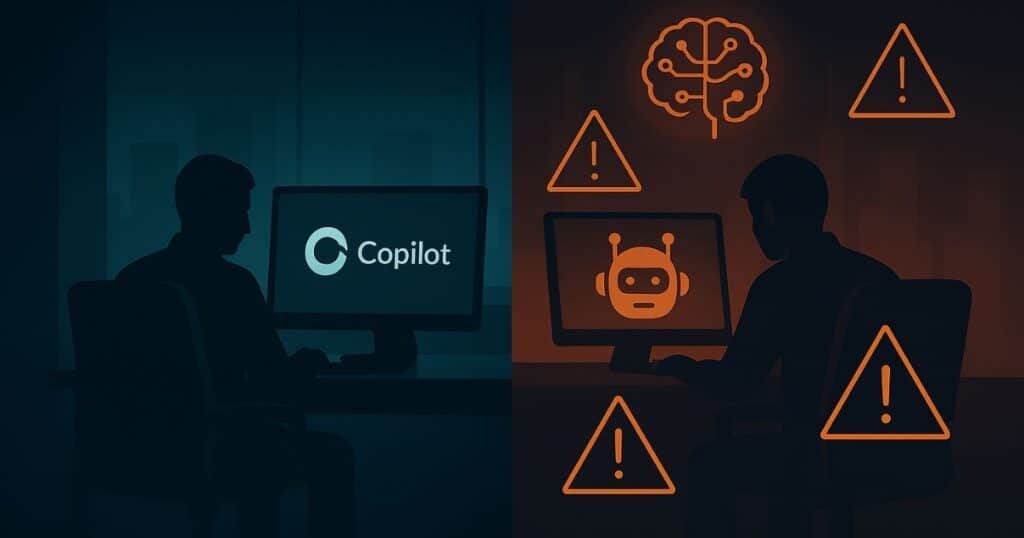
Shadow AI: Executive Briefing on Real Risks, Business Impact and Mitigation
Shadow AI is here, and it’s growing Shadow AI is the use of artificial intelligence tools and platforms outside the oversight of IT, security, or compliance teams. This is not a hypothetical concern. KPMG’s 2025 global survey found that up to 58% of employees are using AI productivity tools daily, and nearly half admit to uploading sensitive company information to unauthorised platforms. Only 41% of employees say their organisation has a policy guiding the use of generative AI, revealing a significant governance gap. The Risks Are Real and Substantial The evidence from leading analysts and recent incidents is clear:…
Cyber Resilience in 2025: From Tick-Box to Boardroom Imperative
What the NCSC’s 2025 Review Means for UK Businesses The National Cyber Security Centre’s (NCSC) 2025 Annual Review is a wake-up call for business leaders across the UK. The days when cyber security was simply an IT concern or a routine compliance task are over. With a record number of nationally significant cyber incidents handled in the past year (more than double the previous year’s figure), it is clear that cyber risks have become a central issue for organisational survival and national prosperity. The Evolving Threat: Why Businesses Can’t Afford Complacency No sector has been spared in the latest…

Is Your MSP Really Helping You Grow — Or Just Keeping the Lights On?
There’s a moment in every business where the question quietly surfaces: “Are we getting what we really need from our IT provider?” It’s not always easy to answer. On the surface, things seem fine. Tickets are resolved. Reports arrive. There’s someone to call when things go wrong. It’s familiar. It’s comfortable. And that comfort can be deceiving. Because beneath the surface, many organisations are stuck in a service relationship that feels safe — but is actually stagnant. And here’s the truth: comfort isn’t the same as progress. For many, the idea of changing MSPs or challenging the…
The 2025 State of Ransomware: Key Insights on Attacks, Costs, and Recovery
Ransomware continues to evolve — and so must our defenses. The State of Ransomware 2025 report from Sophos presents one of the most comprehensive views yet into how organisations around the world are being impacted by ransomware attacks. Based on an independent survey of 3,400 IT and cybersecurity leaders across 17 countries, the report explores how attacks are evolving, the operational weaknesses adversaries exploit, and the human and financial tolls that follow. Whether you’re building a cybersecurity strategy or assessing risk, this year’s findings offer crucial, real-world insights to guide your response. Key Findings from…