


The Importance of a Sustainable IT Business Model

Environmental, social, and governance (ESG) issues and strategies flood headlines daily, particularly sustainability issues. As we continue to innovate technology, we see how much more we can help the environment than was previously possible. As a result, the biggest culprits for polluting the environment – companies with a large carbon footprint – are being held accountable and the IT industry is no exception. Businesses must go beyond ‘greenwashing’ and ensure that their practices are truly sustainable to limit their impact on the planet.
We see an increase in requirements from the Government, stakeholders, employees, and consumers to comply with regulations and to do our part in the fight against climate change, all while ensuring our bottom line doesn’t waver.
The speed at which these innovations and requirements occur can deter leaders in business from switching to more sustainable business solutions. Overwhelmed and facing paralysis by analysis, they fail to keep up and fall behind competitors. ESG has now become a competitive component of business strategy. ESG-focused institutional investments will climb to 84% in 2026, reinforcing that investors, consumers, and employees have a sharp eye on business sustainability practices, especially within the technology sector. Private equity backed businesses can also expect to benefit from ESG programme implementation, with 50% citing better investment performance as a key reason to incorporate ESG.
Additionally, consumers are 88% more loyal to companies that support ESG practices, and 71% of employees and employment seekers find businesses with a sustainable focus more attractive. The bottom line is that implementing sustainable practices will lead to higher retention of employees, increased investment, and the attraction of top talent to businesses.

With this shift in focus, nearly 70% of CEOs plan to invest in new sustainable products or make current products more sustainable. In 2023, the tech industry will move faster on climate action than non-tech industries, with 73% of Tech C-suite executives hoping to reach net zero by 2030. The tech industry – unsurprisingly – is 40% more likely to take climate action versus a predicted 34% in other sectors. With technology being a primary driver in our ability to fight climate change and reduce carbon footprints, it is instinctive that our industry leads this action. As technology evolves, so should our ability and willingness to do more. No business has discovered a foolproof strategy to get it right 100% of the time, but a desire to educate yourself and the company on new technologies makes a difference.
When asking business leaders what technologies organisations were investing in to initiate sustainability – 19% stated digital and IT solutions. Businesses are now indicating they are looking to make investments by switching to more sustainable IT solutions. Sustainable solutions are now integral to the core tech stack. If your company has not invested in sustainable solutions, it will leave the business disadvantaged against competitors.
Even with persuasive statistics, there is a looming concern many business decision-makers have with implementing sustainable practices – the potential of additional costs. Leading some to believe it is counterintuitive for business growth – which isn’t the case.
According to a Gartner report, 4 out of 5 leaders see sustainability optimising and reducing costs, and 83% indicated sustainability programmes created both long and short-term value for their organisation. Value can take many forms; whether it increases your topline growth, mitigates risk for your company, or aids in an overall increase in productivity, these values are indispensable for effective business practices.
Businesses can implement sustainability within their business model by shifting to cloud computing, which according to Microsoft Corp., is 93% more energy-efficient than on-premise data centres. Businesses can refine current digital transformation strategies to ensure digitalisation wherever possible to reduce paper waste. Or even something as small as purchasing refurbished hardware, which allows for buying products in a new or like-new condition that can sell for 30 to 50 per cent of the price – without sacrificing quality. Leaders can also ensure partners have the same vision as the business regarding sustainable interest and action, allowing you to build your sustainable product offering to customers.
Remaining competitive in today’s market is an uphill battle for businesses. One of the most significant ways to showcase a competitive edge is by prioritising a sustainable business model and continually improving technological advancements. As business leaders, it should be a priority to encourage a more sustainable business culture by conducting research and educating ourselves on the implications of our current business standings. Espria has successfully utilised sustainability assessment tools to inform our next steps and those of our customers. We must invest in the changes we want to see, because not only is sustainability crucial for preserving our planet, but it is crucial for preserving your business’s success.
Learn more about our environmental, social and governance journey by reading our guide below:
You may be interested in
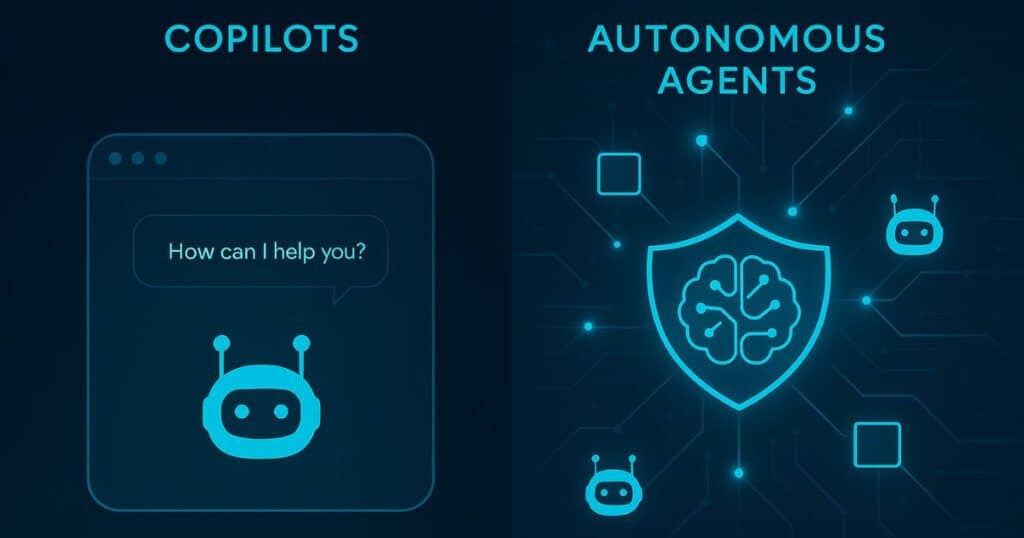
Beyond Copilots: Why AI Agents Are the Next Competitive Advantage
AI is no longer a tactical tool, it’s becoming the engine of enterprise transformation. While copilots and other generative AI tools have helped teams work faster, the real breakthrough is happening with AI agents: autonomous systems that don’t just assist but act, learn and orchestrate entire workflows across the business. The question every executive should be asking is: “How will we harness AI to create value at scale before our competitors do?” High-performing organisations aren’t waiting. They’re embedding AI agents into daily operations and seeing measurable impact; accelerated decision-making, leaner processes and stronger financial outcomes. When markets move at digital speed, standing still means falling behind. Here’s why: So, the question isn’t “Should we adopt AI?”, it’s “What could…
Zero Trust Networking
Protecting Employees Without Friction Your workforce is your greatest asset, and your greatest vulnerability. Attackers know this, which is why phishing and credential theft remain the most common entry points. But here’s the leadership challenge: how do you protect employees without slowing them down? Zero Trust answers that question by making security invisible yet uncompromising. Employees work from anywhere, home, client sites, airports, without clunky VPNs or endless password resets. Behind the scenes, every login is verified, every device assessed, every anomaly flagged. If something looks wrong, a compromised credential, an unusual location, the system reacts…
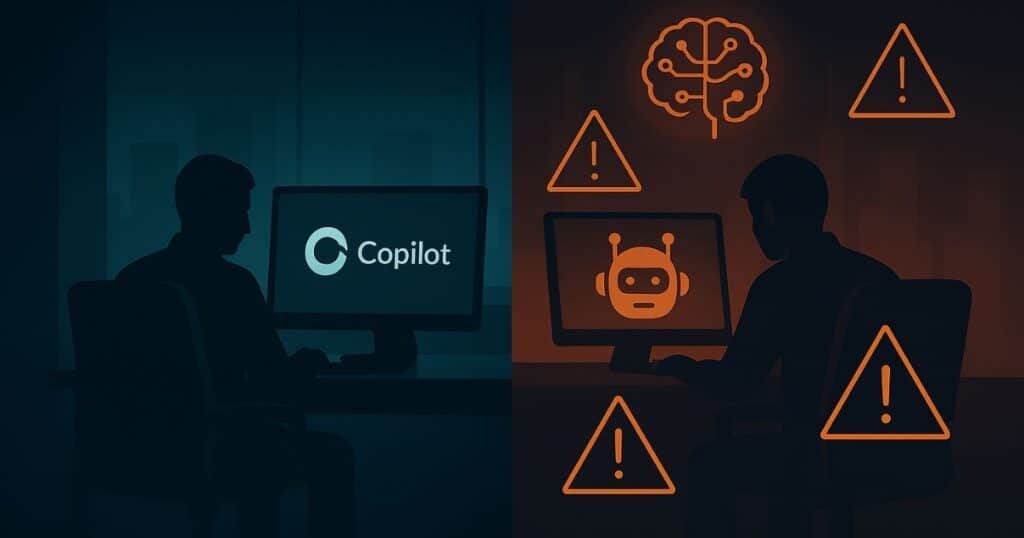
Shadow AI: Executive Briefing on Real Risks, Business Impact and Mitigation
Shadow AI is here, and it’s growing Shadow AI is the use of artificial intelligence tools and platforms outside the oversight of IT, security, or compliance teams. This is not a hypothetical concern. KPMG’s 2025 global survey found that up to 58% of employees are using AI productivity tools daily, and nearly half admit to uploading sensitive company information to unauthorised platforms. Only 41% of employees say their organisation has a policy guiding the use of generative AI, revealing a significant governance gap. The Risks Are Real and Substantial The evidence from leading analysts and recent incidents is clear:…
Cyber Resilience in 2025: From Tick-Box to Boardroom Imperative
What the NCSC’s 2025 Review Means for UK Businesses The National Cyber Security Centre’s (NCSC) 2025 Annual Review is a wake-up call for business leaders across the UK. The days when cyber security was simply an IT concern or a routine compliance task are over. With a record number of nationally significant cyber incidents handled in the past year (more than double the previous year’s figure), it is clear that cyber risks have become a central issue for organisational survival and national prosperity. The Evolving Threat: Why Businesses Can’t Afford Complacency No sector has been spared in the latest…

Is Your MSP Really Helping You Grow — Or Just Keeping the Lights On?
There’s a moment in every business where the question quietly surfaces: “Are we getting what we really need from our IT provider?” It’s not always easy to answer. On the surface, things seem fine. Tickets are resolved. Reports arrive. There’s someone to call when things go wrong. It’s familiar. It’s comfortable. And that comfort can be deceiving. Because beneath the surface, many organisations are stuck in a service relationship that feels safe — but is actually stagnant. And here’s the truth: comfort isn’t the same as progress. For many, the idea of changing MSPs or challenging the…
The 2025 State of Ransomware: Key Insights on Attacks, Costs, and Recovery
Ransomware continues to evolve — and so must our defenses. The State of Ransomware 2025 report from Sophos presents one of the most comprehensive views yet into how organisations around the world are being impacted by ransomware attacks. Based on an independent survey of 3,400 IT and cybersecurity leaders across 17 countries, the report explores how attacks are evolving, the operational weaknesses adversaries exploit, and the human and financial tolls that follow. Whether you’re building a cybersecurity strategy or assessing risk, this year’s findings offer crucial, real-world insights to guide your response. Key Findings from…