


Cyber Resilience in 2025: From Tick-Box to Boardroom Imperative

What the NCSC’s 2025 Review Means for UK Businesses
The National Cyber Security Centre’s (NCSC) 2025 Annual Review is a wake-up call for business leaders across the UK. The days when cyber security was simply an IT concern or a routine compliance task are over. With a record number of nationally significant cyber incidents handled in the past year (more than double the previous year’s figure), it is clear that cyber risks have become a central issue for organisational survival and national prosperity.
The Evolving Threat: Why Businesses Can’t Afford Complacency
No sector has been spared in the latest wave of cyber-attacks. High-profile breaches at household names such as Marks & Spencer, Jaguar Land Rover, and the Co-op Group have demonstrated that the impact extends well beyond data loss. From empty supermarket shelves to halted production lines, the fallout from cyber incidents is now hitting core operations, customer trust, and the bottom line.
The NCSC’s review paints a stark picture of the threat landscape. Attackers range from state-backed groups, such as China’s Flax Typhoon and Russia’s Authentic Antics, through to opportunistic cyber criminals from North Korea and Iran.
Ransomware remains the most acute threat, with attackers targeting organisations based on their willingness to pay, vulnerability to disruption, and the sensitivity of their data. Increasingly, cyber criminals are also seeking out low-hanging fruit. This means businesses with obvious security weaknesses or gaps in basic cyber hygiene, such as unpatched systems or poorly protected credentials. These organisations present attractive, easy targets for attackers looking to maximise impact with minimal effort.
Moving Beyond the Tick-Box: What Businesses Must Do Now
The NCSC’s message is unequivocal: cyber resilience can no longer be treated as a tick-box exercise. Businesses must embed security thinking at every level, with boardroom engagement and proactive governance at the forefront. Here’s what you need to do:
- Make Cyber Security a Board Priority: Ensure that directors and top executives understand their cyber responsibilities. Engage with initiatives like the NCSC’s Cyber Governance Training to build leadership-level awareness and accountability.
- Engineer for Resilience: Invest in automated prevention tools and robust incident response plans. Don’t wait for the breach, leaders need to focus on building defences that can withstand and recover from attacks.
- Prepare and Practise Incident Response: Having a robust incident response plan is critical. Ensure your organisation knows exactly what to do if systems go down, including clear lines of communication to all staff and stakeholders. Sometimes, this may mean reverting to ‘old school’ methods such as using paper-based processes, emergency phone trees, or in-person briefings if IT systems are compromised. Planning for these scenarios helps ensure business continuity, even when technology fails.
- Audit and Test Regularly: Move beyond paper compliance by conducting regular vulnerability assessments, red-teaming exercises, and supply chain risk reviews.
- Embrace Emerging Technologies Safely: Prepare for the next generation of threats, from post-quantum cryptography to AI-driven attacks. Foster a culture of radical transparency and continuous improvement in your cyber strategies.
- Integrate Cyber Across the Business: Ensure that cyber resilience is woven into all aspects of operations, from procurement and HR to customer services and IT infrastructure.
From Lip Service to Living Standards: Embedding Cyber Essentials Plus and ISO 27001
It is no longer enough for organisations to simply pay lip service to frameworks such as Cyber Essentials Plus and ISO 27001. Achieving these certifications should not be treated as a one-off badge of honour or a box to tick for compliance. Instead, they must be adopted as living, breathing standards that shape the daily habits, values, and decision-making processes within the business. This means fostering a culture where security best practices are instinctive, integrated into onboarding, staff training, procurement, and even product design rather than left to periodic audits or the IT department alone. By truly embedding these frameworks into the company’s ethos, businesses can ensure that cyber resilience is not just a compliance requirement, but a shared responsibility and a vital part of organisational identity.
The Path Forward: Act Now, Not After the Fact
The NCSC’s review makes one thing abundantly clear: cyber resilience is now a matter of business survival, not just technical compliance. World-class capabilities are only effective when matched by leadership, a clear sense of purpose, and genuine integration across the organisation. For compliance leaders, IT heads, and board members, the imperative is to act now, or you will pay the price eventually.
Don’t wait for a breach to force your hand. Elevate cyber resilience to the boardroom, invest in robust defences, and foster a culture where security is everyone’s responsibility. In 2025 and beyond, only those organisations that move beyond tick-box thinking will thrive in Britain’s increasingly hostile digital landscape.
Written by Richard Puckey
You may be interested in
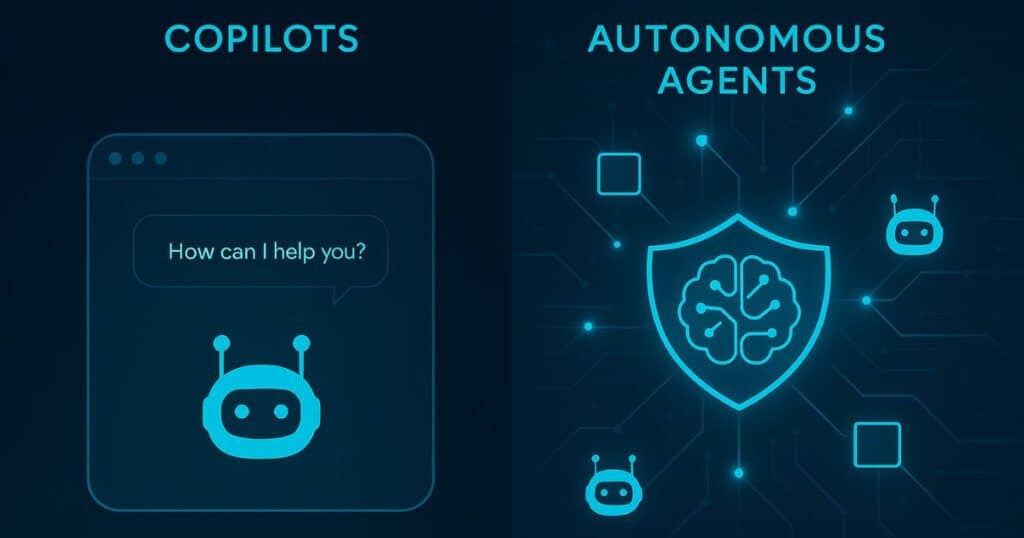
Beyond Copilots: Why AI Agents Are the Next Competitive Advantage
AI is no longer a tactical tool, it’s becoming the engine of enterprise transformation. While copilots and other generative AI tools have helped teams work faster, the real breakthrough is happening with AI agents: autonomous systems that don’t just assist but act, learn and orchestrate entire workflows across the business. The question every executive should be asking is: “How will we harness AI to create value at scale before our competitors do?” High-performing organisations aren’t waiting. They’re embedding AI agents into daily operations and seeing measurable impact; accelerated decision-making, leaner processes and stronger financial outcomes. When markets move at digital speed, standing still means falling behind. Here’s why: So, the question isn’t “Should we adopt AI?”, it’s “What could…
Zero Trust Networking
Protecting Employees Without Friction Your workforce is your greatest asset, and your greatest vulnerability. Attackers know this, which is why phishing and credential theft remain the most common entry points. But here’s the leadership challenge: how do you protect employees without slowing them down? Zero Trust answers that question by making security invisible yet uncompromising. Employees work from anywhere, home, client sites, airports, without clunky VPNs or endless password resets. Behind the scenes, every login is verified, every device assessed, every anomaly flagged. If something looks wrong, a compromised credential, an unusual location, the system reacts…

Shadow AI: Executive Briefing on Real Risks, Business Impact and Mitigation
Shadow AI is here, and it’s growing Shadow AI is the use of artificial intelligence tools and platforms outside the oversight of IT, security, or compliance teams. This is not a hypothetical concern. KPMG’s 2025 global survey found that up to 58% of employees are using AI productivity tools daily, and nearly half admit to uploading sensitive company information to unauthorised platforms. Only 41% of employees say their organisation has a policy guiding the use of generative AI, revealing a significant governance gap. The Risks Are Real and Substantial The evidence from leading analysts and recent incidents is clear:…

Is Your MSP Really Helping You Grow — Or Just Keeping the Lights On?
There’s a moment in every business where the question quietly surfaces: “Are we getting what we really need from our IT provider?” It’s not always easy to answer. On the surface, things seem fine. Tickets are resolved. Reports arrive. There’s someone to call when things go wrong. It’s familiar. It’s comfortable. And that comfort can be deceiving. Because beneath the surface, many organisations are stuck in a service relationship that feels safe — but is actually stagnant. And here’s the truth: comfort isn’t the same as progress. For many, the idea of changing MSPs or challenging the…
The 2025 State of Ransomware: Key Insights on Attacks, Costs, and Recovery
Ransomware continues to evolve — and so must our defenses. The State of Ransomware 2025 report from Sophos presents one of the most comprehensive views yet into how organisations around the world are being impacted by ransomware attacks. Based on an independent survey of 3,400 IT and cybersecurity leaders across 17 countries, the report explores how attacks are evolving, the operational weaknesses adversaries exploit, and the human and financial tolls that follow. Whether you’re building a cybersecurity strategy or assessing risk, this year’s findings offer crucial, real-world insights to guide your response. Key Findings from…

Outgrowing your MSP; businesses need a provider that scales with their growth
To stay competitive, business leaders must align with MSPs that deliver strategic value, drive innovation, and support to scale. Now firmly into 2025, it’s becoming clear what the year has in store for the IT landscape. For SMBs, the message is clear: business growth must be matched with smarter, more scalable managed services. The demand for cyber-resilient, cloud-first and AI-integrated solutions is no longer a forecast – it’s a reality already shaping business priorities. According to leading global technology market analyst firm Canalys’ MSP Trends 2025 report, the MSP model is transforming under growing pressure…